
- [email protected]
- Availability Location: Greece
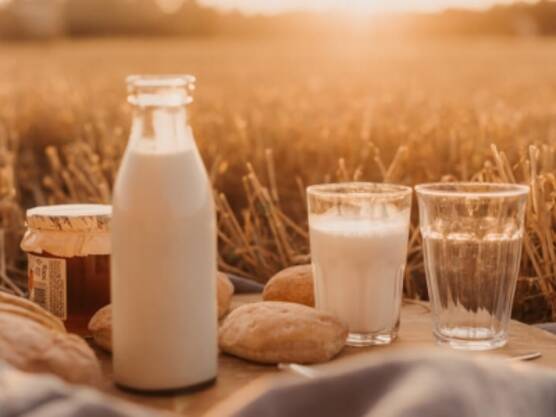
Milk is widely considered the primary and most essential food source for humanity. While cow's, goat's, and sheep's milk are the most common, it is also harvested from other animals such as horses, camels, and buffaloes depending on the region. Biochemically, milk is a nutrient-dense mixture of vital organic substances, consisting of water, fats, proteins, carbohydrates, enzymes, mineral salts, and vitamins. As an exceptionally rich source of calcium, it plays a crucial role in maintaining strong bones and healthy skin.
Once raw milk is processed by the dairy industry, it yields a wide variety of valuable products, including cheese, yogurt, butter, ice cream, and cream. Milk and its derivatives are fundamental in global gastronomy, serving as core components in countless savory dishes and desserts. They form the backbone of European and Indian cuisines, whereas they traditionally remain less prevalent in East Asian culinary cultures. Notably, global consumption of dairy has grown exponentially since the early 1950s. Beyond nutrition, milk has historically served as a foundational ingredient in various skincare and cosmetic products.
The production of cheese and other dairy goods is a fascinating process that many regional producers still practice traditionally. However, driven by rising local and international market demands, modern dairy production places immense emphasis on strict hygienic conditions. Today, facilities utilize advanced laboratory equipment to ensure high-quality standards. To produce premium dairy and cheese, the raw milk must be sourced exclusively from healthy animals, remaining entirely free of chemical contaminants, impurities, and microbiological hazards.
In Greece, the art of cheese-making spans thousands of years, with evidence suggesting that ancient Greeks regarded cheese as a sacred food. Historical references to cheese production appear in the works of Aristotle and Aristophanes, while Homer famously describes the giant Cyclops Polyphemus crafting goat's milk cheese in The Odyssey.
During the Byzantine Empire, records indicate the creation of a cheese highly resembling modern Feta. Following the liberation from Ottoman rule, the newly formed Greek state relied heavily on livestock farming and traditional cheese-making to revitalize its economy, leading to the creation of numerous distinct Greek cheeses. Today, cheese remains an indispensable part of the daily Greek diet, with each region boasting its own unique heritage, resulting in more than 70 officially recorded types of traditional Greek cheese.