
- [email protected]
- Availability Location: Greece
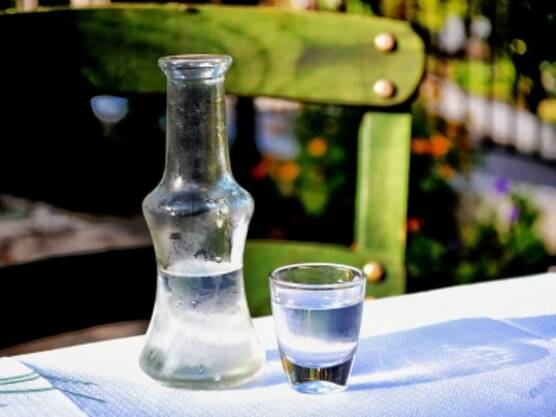
The long history of raki stems back to the Minoan era, while the refined art of distillation found fertile ground in Greece around the 15th century. Historical documents from the Ecumenical Patriarchate indicate that this practice originally began by monks on Mount Athos. From there, its fame spread rapidly across the Ottoman Empire, turning regions like Crete, Constantinople, Smyrna, and Alexandria into major distillation hubs.
During the Ottoman era, Greek subjects heavily engaged in the art of raki production. Since wine consumption was restricted under Islamic law, grape remnants were instead distilled to create a potent spirit. Because the Ottomans rarely involved themselves with viticulture, the profession of vine cultivation and distillation became entirely monopolized by Greeks. Soon, Greek raki producers, collaborating with traditional herb and spice perfumers, formed a highly respected and privileged social class.
Centuries later, following the Asia Minor Catastrophe, displaced raki producers sought refuge and a fresh start in Greece, rapidly spreading their unique distillation techniques and refining the country's spirit industry.
There are varying views regarding the origin of the name. It is called "raki" likely deriving from the distillate produced from grape skins, rooted in the ancient Greek word rax (or the Ionian roux, meaning grape). Across most parts of Greece, the drink can often be found referred to in the neuter form as "to raki." However, in Crete, it is traditionally and strictly customary to use the feminine form, "i raki." Furthermore, on the island, it is widely known as "tsikoudia," because the pomace (grape skins and seeds) is called tsikouda in the local Cretan dialect.
It is worth noting that Turkish raki is a fundamentally different beverage; it includes anise and other aromatic additives and undergoes double distillation, unlike the pure, single-distillation spirit of Greek raki.
The creation of raki is a meticulous process tied directly to traditional winemaking:
During the wine press, the remnants of the grapes (must, skins, and seeds) are sealed inside barrels. They remain there until the natural fermentation process is fully completed, turning the mixture into what is known as pomace or tsikouda.
Once fermented, the pomace is transferred into sealed copper cauldrons, traditionally called rakokazana or ambykes. Fire is lit beneath them, and as the mixture boils, the distillation process begins. Maintaining a slow, steady pace during this phase yields the highest quality spirit. The resulting steam rises into the lid, passes through a tube cooled externally by cold water, and liquefies into a clear stream of tsikoudia.
The very first fraction of the distillate, known as protorako, is exceptionally high in alcohol and is considered the strongest. Standard raki typically settles at around 37% to 45% alcohol by volume (ABV), rightfully placing it among the most potent traditional spirits.
In Crete, raki is far more than just an alcoholic drink; it is a profound symbol of friendship, hospitality, and social connection. It is shared to ease sorrows, celebrate joys, and serve as a traditional remedy for both physical and emotional ailments.
The entire production process is a revered ritual for the island's inhabitants. The famous autumn cauldron gatherings, known as kazanemata, last for about two months and take place in specially designated spaces. Locals gather around the roaring fire, playing the lyre, dancing, and tasting traditional Cretan delicacies while eagerly waiting for the fresh, transparent, and fragrant nectar to flow from the still.